


 Great news for BuLo fans! The BuLo mark is now a registered mark!
Friday, April 15, 2011


BuLo® Channel Partner Training Program

The training began with Mechanical Designing and Software Programming. The partners worked on different BuLo products like BuLo® Robotronics LITE and BuLo® Robotronics FULL. The first few sessions focused on basic designing of mechanical robots.They then moved on to gear mechanisms and automated robots.

The training program also covered how to efficiently manage Sessions, conducting Assessment Programs in schools and .
The confidence and dedication of our channel partners is really motivating. We wish them good luck with BuLo® Learning Systems. Let's make learning fun!
Monday, November 22, 2010
Screw Driver Mysteries.....
Tightening screws can be bugging at times. You keep rotating the screw driver and the screw refuses to tighten!!

With the Screw Driver Mysteries solved, you can actually get the task done in a few seconds rather than minutes. I have listed a few for you:
1. Right Direction : All screws tighten in the clockwise direction and loosen in the anti-clockwise direction.
2. Right Tip: The tip of the screw driver should be almost equal to the size of the screw's head. This makes sure all the force you apply is directed at the right place.
3. Right Size: Choose your screw driver depending on how much power you require. For more power, use one with a short shank (the part between the tip and the handle) .
If you have resolved any more Mysteries, feel free to share them!
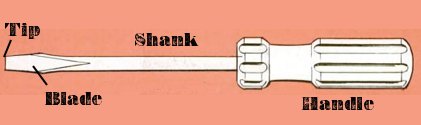
With the Screw Driver Mysteries solved, you can actually get the task done in a few seconds rather than minutes. I have listed a few for you:
1. Right Direction : All screws tighten in the clockwise direction and loosen in the anti-clockwise direction.
2. Right Tip: The tip of the screw driver should be almost equal to the size of the screw's head. This makes sure all the force you apply is directed at the right place.
3. Right Size: Choose your screw driver depending on how much power you require. For more power, use one with a short shank (the part between the tip and the handle) .
If you have resolved any more Mysteries, feel free to share them!
Saturday, November 06, 2010
Diwali Celebration

We had a great Diwali Celebration at our office on Thursday. As it turns out, we are not only good at designing Robots but also at Rangolis :). Well find it hard to believe check the picture below:
Tuesday, September 28, 2010
IRC 2010 Problem Statement
Hey Friends!
So you are worried about the IRC-2010? Well, the arena dimensions are here. This would give help in designing the robot according to the track's dimensions.
So you are worried about the IRC-2010? Well, the arena dimensions are here. This would give help in designing the robot according to the track's dimensions.
.

Monday, September 27, 2010
Sunday, September 05, 2010
Magical Torque......
In the post At the Right Angle, I talked about the definition of force and its application in Robotic Arm and Base. In today's post, I will talk about how Torque can create magic!!
We need to apply a bit of mathematics here to understand the magic.
Torque is calculated by the formula:
T = F*d
T is the torque
F is the force applied perpendicular (at 90 deg.) to the axis
d is the distance

We need to apply a bit of mathematics here to understand the magic.
Torque is calculated by the formula:
T = F*d
T is the torque
F is the force applied perpendicular (at 90 deg.) to the axis
d is the distance

By using the above formula, we can calculate torque for Geared systems. Lets, take the example of the gear system below:

Here, we have attached a gear system with a pulley. Let us assume the load on the pulley is 1 kg and the diameter of the pulley is 1 inch. Then the torque would be:
T= F* d = 1 kg * 1 inch = 1 kg-inch
Now, what would be the torque on the Big Gear? The torque transferred on the Big Gear would also be 1kg-inch. This is because the torque remains constant on the shaft, and is transferred to the big gear.
The next step is to calculate the force on contact point B. We know the Torque is 1 kg-inch and the diameter of the Big Gear 1 inch. So,
F = T/d = 1 kg-inch * 1 inch = 1 kg
So now lets calculate the torque on the motor. The force on the Small Gear is 1 kg and its diameter is 1/4 inch. The resultant torque on the motor shaft is:
T= F * d = 1 kg * 1/4 inch = 1/4 kg-inch
Did you see the magic happen?
Torque at motor = 1/4 kg - inch
Torque at Pulley = 1 kg- inch!!
Torque increases magically, but only if we put the gear systems right!

Here, we have attached a gear system with a pulley. Let us assume the load on the pulley is 1 kg and the diameter of the pulley is 1 inch. Then the torque would be:
T= F* d = 1 kg * 1 inch = 1 kg-inch
Now, what would be the torque on the Big Gear? The torque transferred on the Big Gear would also be 1kg-inch. This is because the torque remains constant on the shaft, and is transferred to the big gear.
The next step is to calculate the force on contact point B. We know the Torque is 1 kg-inch and the diameter of the Big Gear 1 inch. So,
F = T/d = 1 kg-inch * 1 inch = 1 kg
So now lets calculate the torque on the motor. The force on the Small Gear is 1 kg and its diameter is 1/4 inch. The resultant torque on the motor shaft is:
T= F * d = 1 kg * 1/4 inch = 1/4 kg-inch
Did you see the magic happen?
Torque at motor = 1/4 kg - inch
Torque at Pulley = 1 kg- inch!!
Torque increases magically, but only if we put the gear systems right!
Subscribe to:
Posts (Atom)


